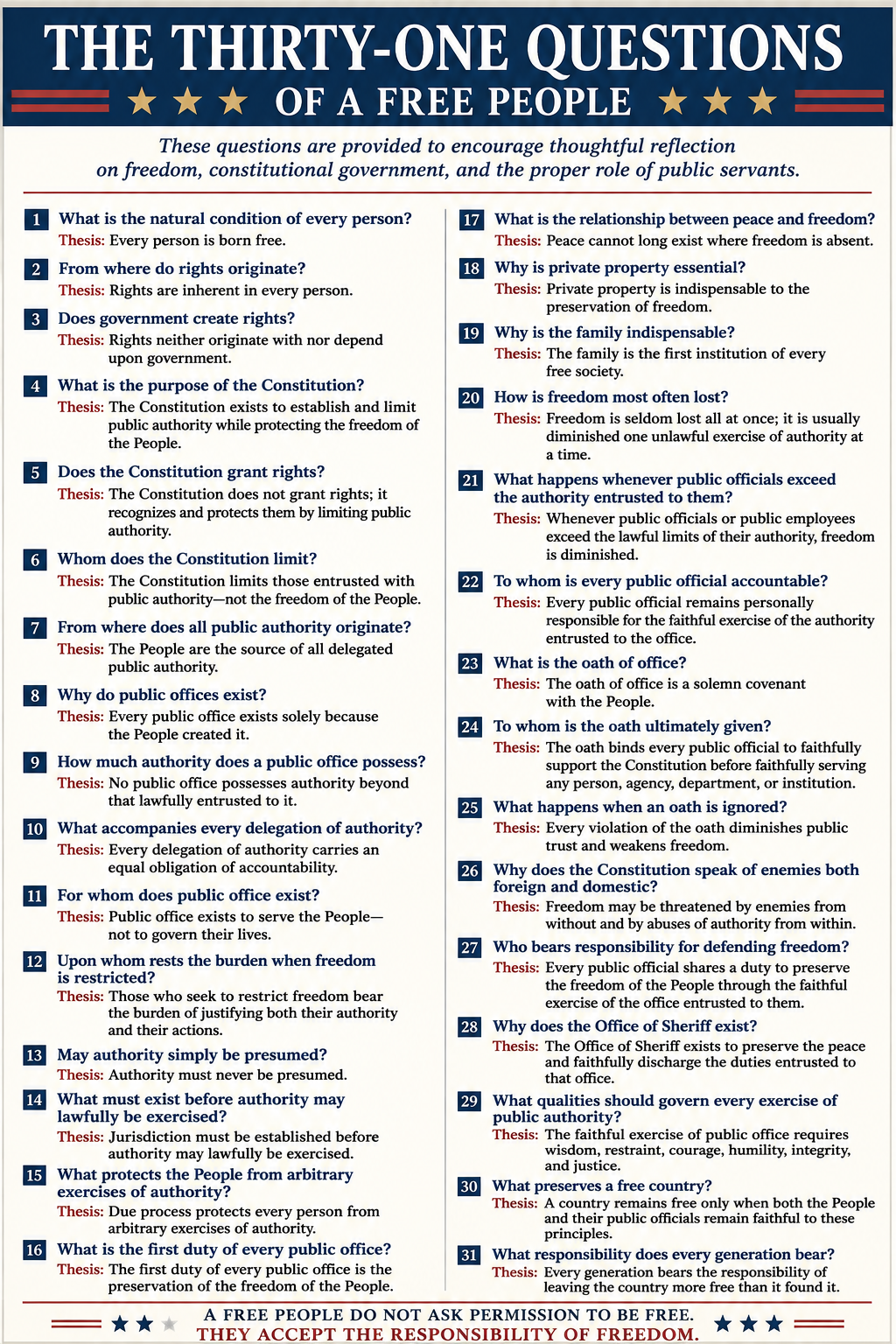
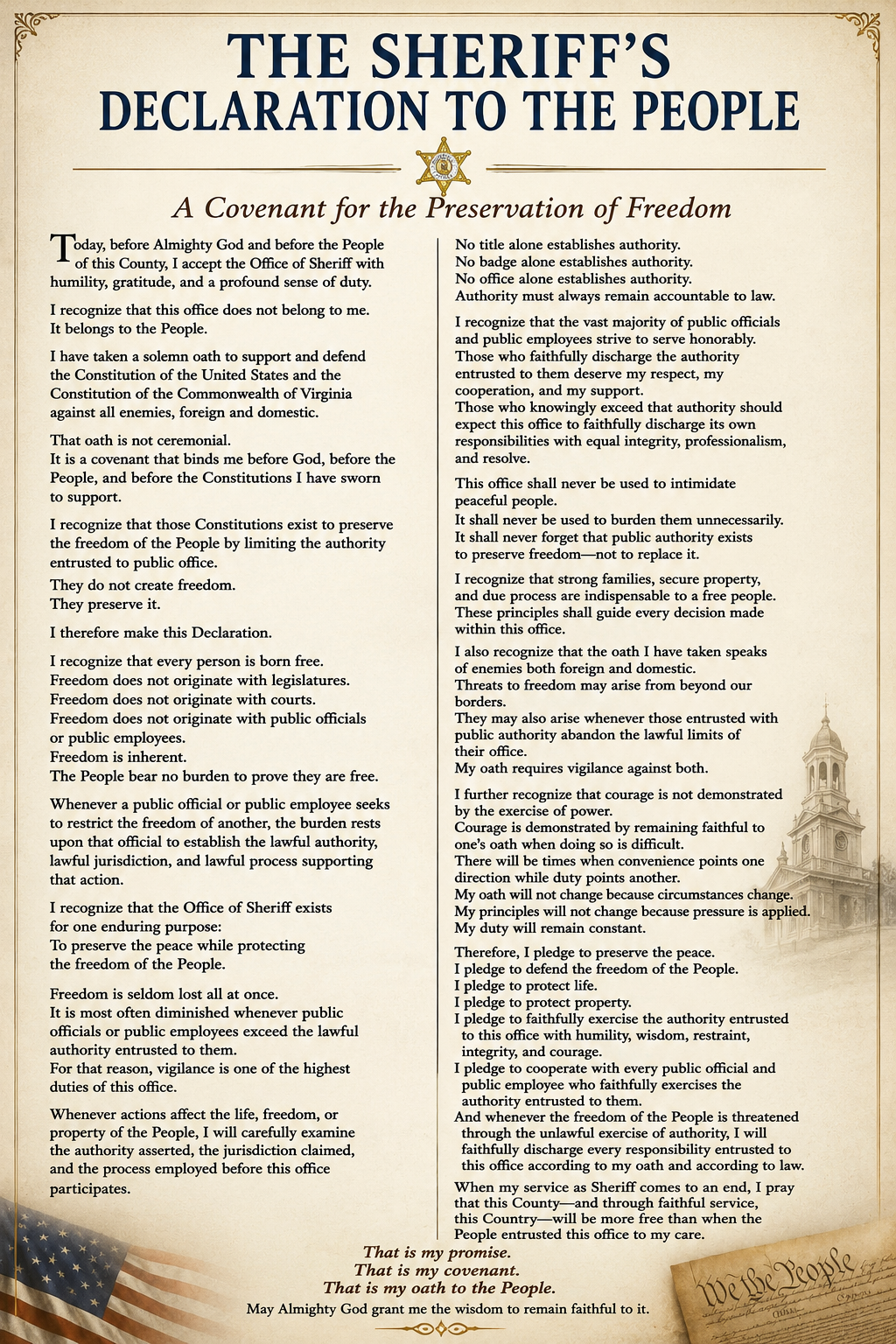
Who Protects the people?
If Government Exists to Protect Liberty, Who Actually Does It?
Most Americans assume that someone, somewhere, is protecting their constitutional rights.
But who?
When a citizen believes a right has been taken from him, a liberty has been burdened, or government has exceeded its proper limits, who is responsible for standing between the individual and the power of the state?
This question lies at the very heart of constitutional government.
Questions Worth Asking
- Who protects the people?
- Is it Congress?
- Is it the President?
- Is it the Supreme Court?
- Is it the Governor?
- Is it the Sheriff?
- Have these officers always understood their constitutional roles?
- Have these limited offices gradually become administrative?
- Who protects the citizen when government itself becomes the source of the grievance?
- If no constitutional officer stands for the people, is there no protection?
A Different Way of Looking at Public Office
Imagine public officers who first ask:
- What right is at stake?
- What liberty may be affected?
- Has anyone been injured?
- Has government remained within its constitutional limits?
Only after those questions are answered would administrative procedures become relevant.
A Forgotten Duty?
The greatest constitutional loss is not merely the expansion of government.
It is that many public offices have gradually come to see themselves primarily as administrators of government rather than protectors of the people.
If that is true, then restoring liberty begins by restoring the purpose of those offices.
The Next Question
If constitutional officers once possessed a greater responsibility to protect the people than others, who were they and where are they now?
The search for that answer begins with two officials in two offices that have existed since the founding of the Republic.
The Governor.
The Sheriff.